
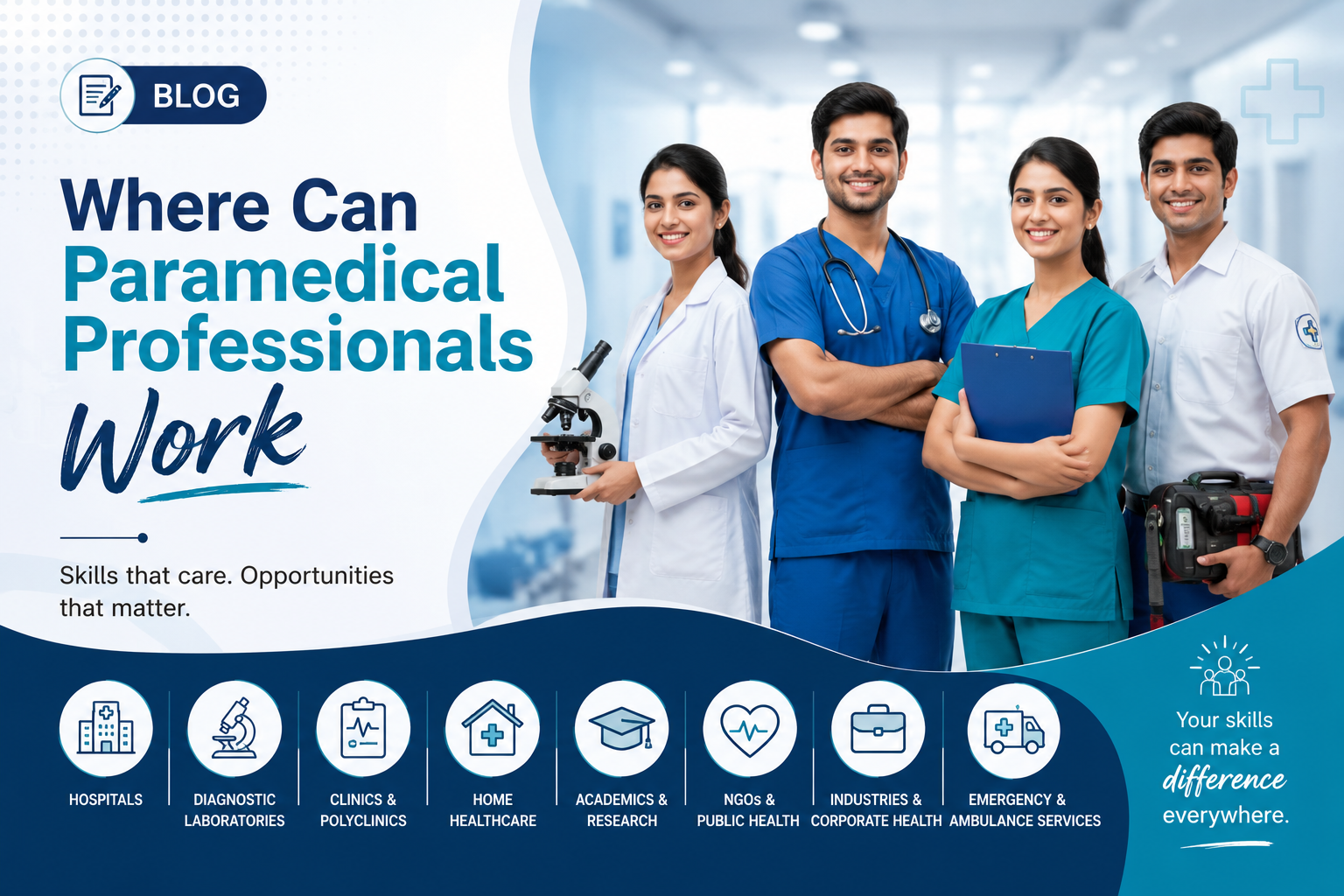
The healthcare industry depends on more than doctors and nurses. Paramedical professionals play an essential role in diagnosis, treatment support, emergency care, rehabilitation, laboratory services, and patient management. As healthcare services continue to expand, students completing paramedical courses can explore career opportunities across a wide range of workplaces.
If you are considering a career in allied healthcare, understanding where paramedical professionals work can help you choose a suitable course and specialization.
Hospitals are among the most common workplaces for paramedical professionals. Depending on their qualifications, they may work in departments such as diagnostic imaging, pathology laboratories, operation theatres, dialysis units, emergency services, and intensive care.
Large hospitals may employ professionals with specialized training in medical laboratory technology, radiology, operation theatre technology, anesthesia technology, cardiac care, and other healthcare fields.
Working in a hospital can provide exposure to different types of patients and medical situations while helping professionals develop practical skills.
Diagnostic centres rely heavily on trained technical staff. Medical laboratory professionals may collect and process samples, perform laboratory procedures, maintain equipment, and assist in preparing test reports under appropriate supervision.
Radiology and imaging professionals can also find opportunities in diagnostic centres, where they may assist with imaging procedures such as X-rays and other diagnostic examinations according to their training and scope of practice.
For students interested in technology, testing, and diagnostic procedures, these workplaces can offer attractive career paths.
Paramedical professionals may also find employment in private clinics, specialty centres, and healthcare facilities. Their responsibilities depend on their qualification and the services provided by the organization.
For example, a specialized clinic may require professionals who can support diagnostic procedures, patient preparation, rehabilitation services, or other clinical activities.
These workplaces can offer a more focused environment compared with large hospitals.
Emergency care is another important area for trained paramedical professionals. Emergency medical personnel may work with ambulance services, emergency response organizations, hospitals, and other healthcare providers.
Their work can involve providing immediate assistance, supporting patient stabilization, and transporting patients safely to appropriate medical facilities, depending on their training and local regulations.
This career path can be suitable for individuals who are comfortable working in fast-paced environments and responding to urgent situations.
Some paramedical and allied healthcare professionals work in rehabilitation centres, physiotherapy facilities, and specialized care settings.
They may support patients recovering from injuries, surgeries, neurological conditions, or other health challenges. Depending on their professional qualification, responsibilities can include assisting with rehabilitation programs, patient care, assessments, or therapeutic services.
The growing need for elderly care and long-term healthcare services has created opportunities in nursing homes, assisted-care facilities, and rehabilitation settings.
Professionals working in these environments may support routine healthcare services, diagnostics, rehabilitation, monitoring, and patient assistance according to their qualifications.
This area can be particularly relevant for individuals interested in long-term patient interaction and supportive healthcare.
Paramedical professionals can also explore opportunities outside direct patient care. Research organizations, medical colleges, universities, and training institutes may require skilled technical personnel.
With additional qualifications and experience, some professionals may move into teaching, laboratory research, clinical support, or academic roles.
This can be an interesting option for people who enjoy learning, research, and education.
Government hospitals, public health centres, diagnostic facilities, and other healthcare institutions can provide career opportunities for qualified paramedical professionals.
Recruitment requirements vary according to the organization, position, qualification, and applicable government regulations. Students interested in government employment should regularly check official recruitment notifications and eligibility requirements.
Before selecting a paramedical course, students should consider their interests and preferred working environment. Someone interested in laboratory work may prefer medical laboratory technology, while a student interested in diagnostic imaging may consider radiology and imaging-related education.
Similarly, students who enjoy emergency situations, patient interaction, technology, or rehabilitation can explore specializations aligned with those interests.
It is also important to choose an institution that provides appropriate theoretical education, practical training, and clinical exposure. Students should verify the course’s recognition, eligibility requirements, curriculum, and career pathways before enrolling.
Paramedical professionals can work across hospitals, diagnostic centres, clinics, emergency services, rehabilitation facilities, laboratories, government healthcare organizations, research institutions, and educational settings. This diversity makes paramedical education an attractive option for students interested in healthcare careers.
If you are exploring paramedical courses, focus on selecting a specialization that matches your interests, strengths, and long-term career goals. The right education combined with practical training can provide a strong foundation for building a rewarding career in the healthcare sector.